Yes, tie rod replacement can leave the existing steering rack in place when the wear is confined to a separately serviceable tie rod and the rack is sound. For Madison, Ohio, drivers, the decision comes down to where the steering play originates and what repair the vehicle’s design allows.
An outer tie rod problem does not automatically call for a rack. An inner tie rod can also be replaceable separately, but that needs confirmation for your exact vehicle. A recommendation for a complete rack should explain either the rack defect or the serviceability limitation that makes the larger repair appropriate.
Inner versus outer: where is the steering play?
On a rack-and-pinion system, the outer tie rod end connects at the steering knuckle near the wheel. The inner joint is farther inboard, beneath the rack’s accordion-shaped bellows boot.
The distinction matters because movement felt at a wheel does not identify the worn component by itself. The inspection needs to locate unwanted movement at the outer joint, the inner joint, or elsewhere in the steering assembly. A joint’s intended pivoting movement is different from unwanted looseness.
MOOG’s steering inspection guidance explains that steering joints should have very little play and that other components can produce similar symptoms. Pulling or unusual tire wear alone is insufficient evidence to choose a tie rod or a rack.
For example, confirmed wear at an outer joint, with a sound inner joint and rack, supports a limited repair when the vehicle’s service information permits it.
When reviewing an inspection, ask the technician to name the joint and show the movement if practical. “There is play in the front end” describes a finding too broadly to explain a complete rack recommendation. The useful distinction is whether the unwanted movement is within a replaceable joint or remains elsewhere after that joint has been accounted for.
Can you replace an inner tie rod separately?
Yes, on applications designed for that repair. MOOG’s inner tie rod replacement instructions describe removing an inner tie rod and installing its replacement onto the existing rack.
Those instructions also require holding the rack against rotation to prevent internal damage. That is one reason the correct procedure matters as much as finding a replacement part.
Before deciding to replace an inner tie rod, the technician should confirm:
- The exact steering assembly fitted to the vehicle.
- Whether its service procedure permits separate joint replacement.
- The correct replacement part and attachment method.
- Whether the existing rack is suitable to retain.
If separate replacement is not supported for that assembly, the repair recommendation needs to account for that limitation. An inner joint’s location next to the rack is not, by itself, evidence that the rack has failed.
For a replacement recommendation, ask which of these situations applies:
| Inspection and parts findings | What the repair explanation should address |
|---|---|
| Wear is isolated to an outer joint; the remaining assembly is sound. | Why replacing that joint addresses the identified fault. |
| Wear is isolated to an inner joint with a supported separate replacement procedure. | Which procedure and part allow the existing rack to remain. |
| Separate inner joint service is not supported for the fitted assembly. | What assembly the service information calls for and why. |
| The rack itself remains suspect. | What additional finding or inspection establishes its condition. |
If the explanation rests on parts design, ask to have that limitation noted on the repair recommendation. If it rests on a failed rack, ask to have the actual inspection finding noted instead.
This separates a parts-design limitation from a diagnosed rack failure. Both can affect the recommendation, but they are different explanations.
What findings warrant further rack inspection?
To decide between a tie rod and a steering rack, the technician needs to look beyond the joint if looseness cannot be isolated there. Movement that appears to come from the rack or its mounting, suspected leakage, and visible damage warrant further inspection. None of these observations alone establishes the full repair needed.
On a hydraulic steering rack, suspected fluid inside a bellows deserves attention. However, a greasy appearance can be misleading. An Infiniti service bulletin hosted by NHTSA distinguishes assembly lubricant from a confirmed power steering fluid leak on specified Hitachi steering gears.
For those listed applications, assembly grease does not justify replacement, while identified power steering fluid inside the boot does. The bulletin’s fluid-color test is specific to those vehicles; it should not be applied universally.
A useful repair explanation identifies what was found, where it was found, and why replacing the tie rod alone would or would not address it.
You can also ask whether the inspection found only joint wear or a second concern. If the recommendation includes a rack, request the reason in plain language: confirmed leakage, identified rack damage or looseness, or a restriction on separate service. That gives you something more useful to evaluate than the location of a worn part alone.
Why check alignment after tie rod replacement?
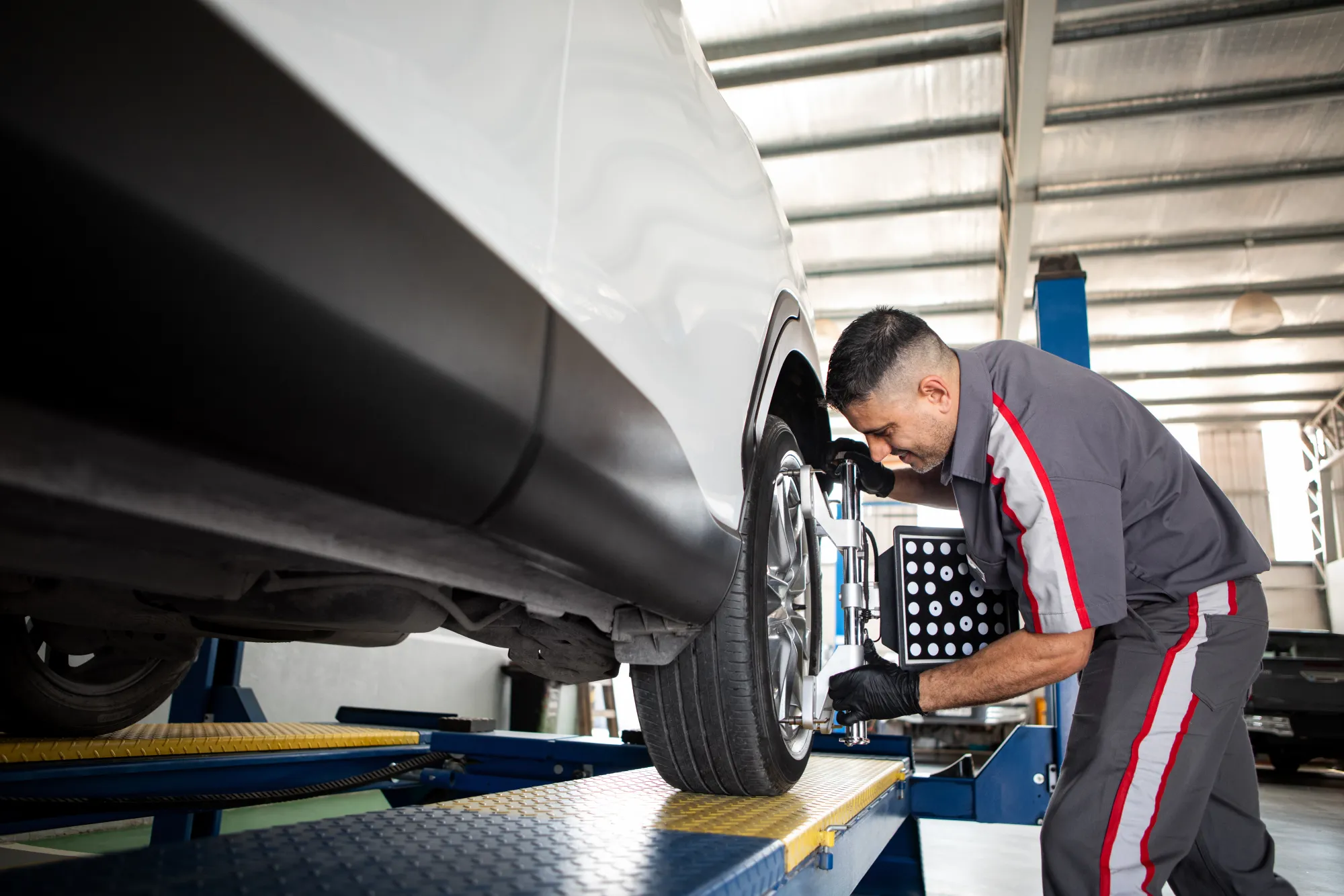
Keeping the rack does not eliminate the alignment step. Tie rods adjust toe, the inward or outward direction of the wheels when viewed from above. Replacing a tie rod can change that setting.
Counting removal turns or matching the old length provides a starting position. It does not verify alignment. Once worn components have been repaired, alignment equipment checks the angles against the vehicle’s specifications so adjustments can be made as needed.
MOOG’s alignment guidance after outer tie rod replacement also explains that changed settings can affect steering angle sensor accuracy. The repair should follow applicable manufacturer requirements for sensor resetting or calibration.
If tire wear prompted the inspection, our guide to measuring tire tread depth at home can help you record tread condition. That observation supports the inspection; it cannot identify which steering part needs replacement.
Before considering the repair complete, ask for the alignment results and whether any applicable steering angle sensor procedure was required. A parts list explains what was installed; those checks explain how the steering adjustment was verified afterward.
The repair scope should follow the findings: replace the worn, serviceable joint when the rack can stay, address a confirmed rack problem when it cannot, and verify alignment afterward.